

Every spring, newcomers fill their carts with plants that Instagram told them to buy. By August, Montana has murdered half of them. By the following May, winter has finished off the rest. Meanwhile, native plants on the same property are thriving, blooming, and wondering what all the fuss is about.
There’s a reason certain plants have called Montana home for thousands of years. They’ve negotiated peace treaties with our weather. They’ve evolved strategies for our soils. They laugh at late spring freezes that send hybrid tea roses to plant heaven. When you work with natives, you’re not gardening against Montana—you’re gardening with it.
Let’s clear this up: native gardens can be as refined as any English border. The difference isn’t in sophistication—it’s in sense. We design with plants that belong here, arranging them in ways that elevate both their natural beauty and your property’s style.
This means understanding which natives play well in formal settings, which ones provide four-season structure, and how to combine them for maximum impact. Your garden can be 100% native and 100% elegant. The two aren’t just compatible—they’re complementary.
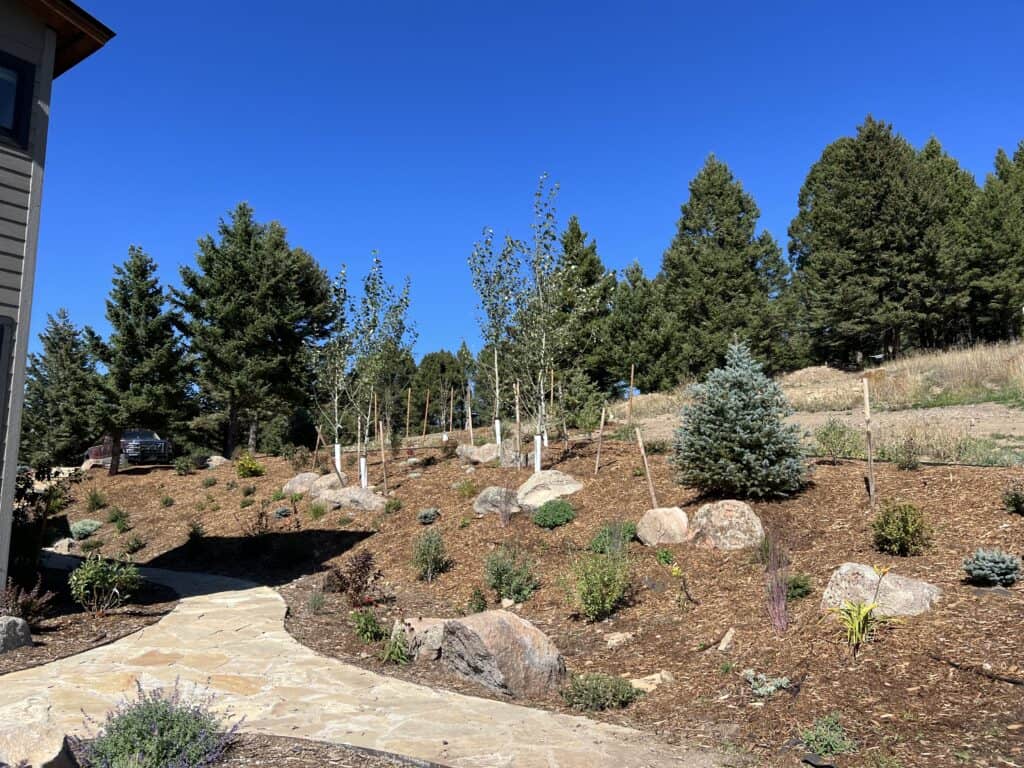
Rocky Mountain Juniper and Limber Pine provide year-round architecture. Quaking Aspen offers screening that dances. Serviceberry delivers spring flowers, summer fruit, fall fire, and winter structure—the full seasonal performance in one native package.
These aren’t just plants—they’re problem solvers. Need privacy? Native shrubs create screens that survive. Want less lawn? Native grasses offer movement and texture without mowing. Erosion issues? Deep-rooted natives hold hillsides better than any import.
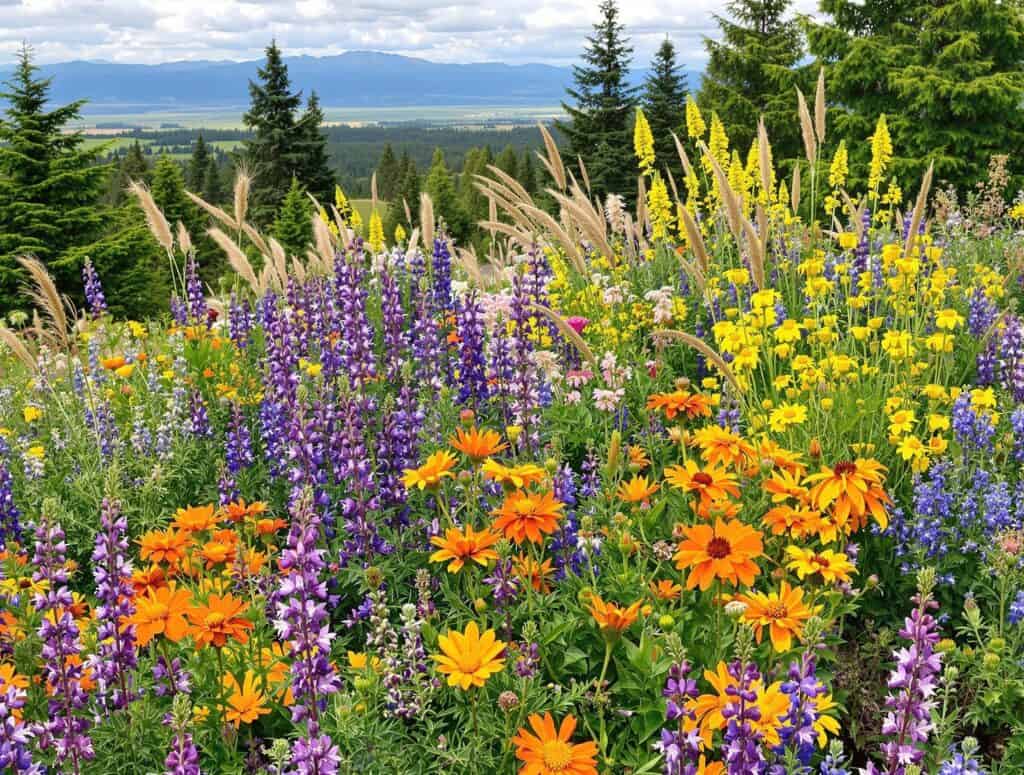
Blanketflower blooms all summer without deadheading. Penstemon attracts hummingbirds like magnets. Native Yarrow shrugs off drought while butterflies feast. Prairie Smoke creates ethereal seed heads that glow in evening light.
We know which natives bloom when, ensuring continuous color from snowmelt to snowfall. No gaps, no mass die-offs, no surprise failures. Just reliable beauty that returns stronger each year.
Idaho Fescue, Prairie Dropseed, and Blue Grama Grass bring movement to gardens. They catch light, sway with breeze, and provide winter interest when everything else hibernates. These aren’t your father’s lawn grasses—they’re living sculptures.
Learning From Wild Montana
The best native gardens steal nature’s playbook. We observe how plants arrange themselves in wild Montana—who grows with whom, which ones pioneer tough spots, how they layer and mingle. Then we refine these patterns for residential settings.
This means placing sun-lovers on exposed slopes, tucking moisture-lovers in swales, and using tough pioneers to colonize difficult areas. Nature’s already done the research. We just need to pay attention.
Creating Cohesive Compositions
Native gardens need design discipline, not less. We use repetition to create rhythm. Contrast to generate interest. Seasonal succession to maintain constant appeal. The result: gardens that feel inevitable rather than imposed.
Color echoes that lead the eye. Texture contrasts that demand attention. Height variations that create depth. All using plants that actually want to grow here. Revolutionary concept, really.
Spring: The Awakening
Pasque Flowers push through snow. Wild Geraniums carpet ground. Chokecherries foam with flowers. Your native garden starts its show while traditional gardens still sleep.
Summer: The Glory Days
Black-eyed Susans mingle with Wild Bergamot. Fireweed shoots up rockets of magenta. Native roses perfume evening air. This is Montana at full throttle—and your garden keeps pace.
Fall: The Grand Finale
Native shrubs explode in colors that make Eastern maples jealous. Grasses turn gold and copper. Seed heads attract migrating birds. Your garden becomes a rest stop on ancient flyways.
Winter: The Quiet Architecture
Dried grasses catch snow like nature’s lace. Shrub structures create shadow patterns. Persistent berries feed winter birds. Your garden provides beauty and habitat when both are scarce.
The Xeric Zones
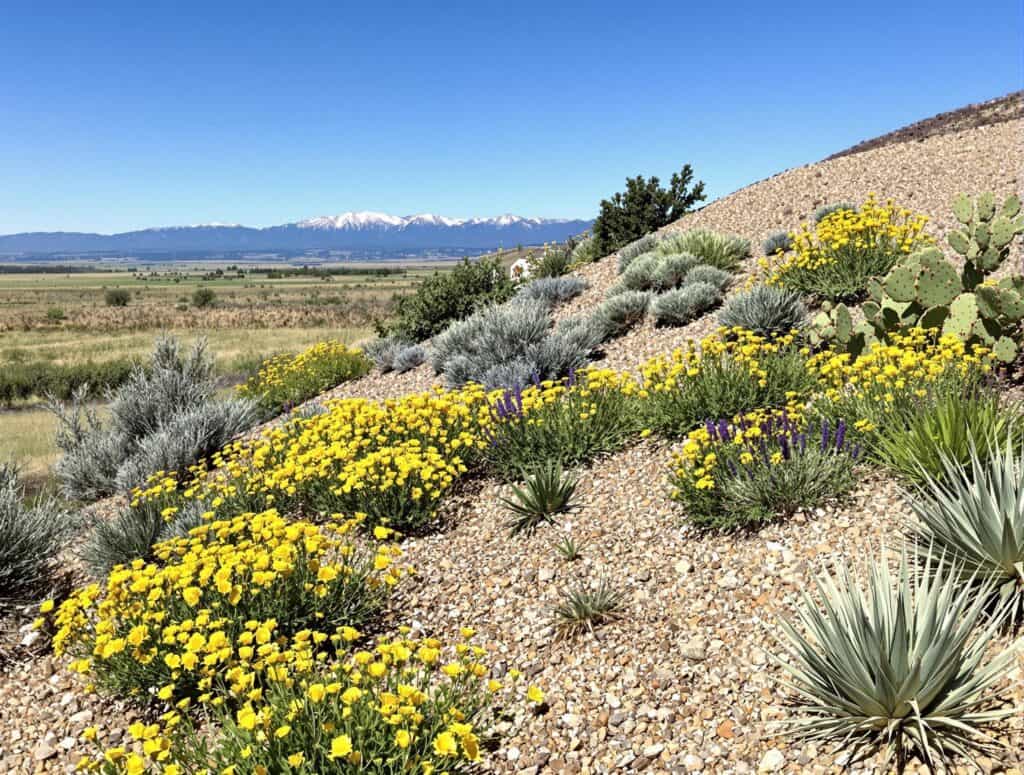
Hot, dry, exposed areas where most plants surrender. We fill them with Sulfur Buckwheat, Prickly Pear Cactus (yes, in Montana), and Silver Sage. These drought warriors thrive where irrigation fears to tread.
The Mesic Middle
Average moisture areas—your garden’s sweet spot. Here, most Montana natives flourish. Lupines, Coneflowers, and native grasses create combinations limited only by imagination.
The Riparian Ribbons
Those naturally moist areas become homes for Water-loving Willows, Native Sedges, and Mountain Alder. We work with water patterns, not against them.
The Shady Refuges
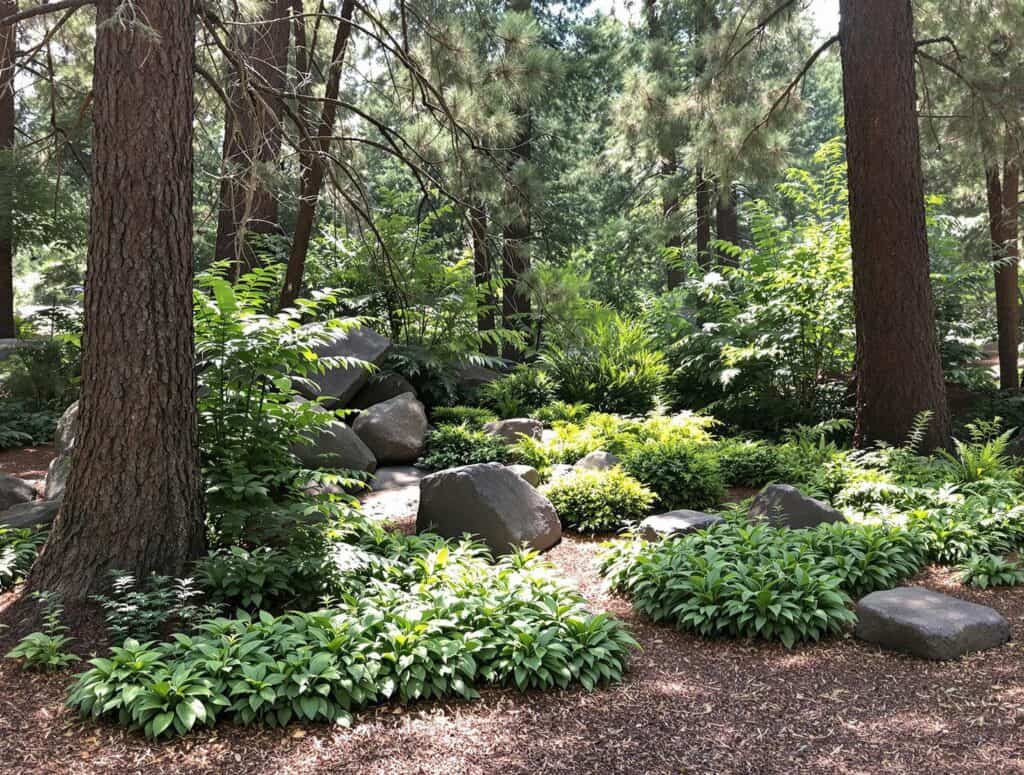
Under trees and north sides, we deploy shade-tolerant natives. Wild Ginger carpets ground. Snowberry handles dry shade.

Bird Paradise by Design
Native plants aren’t just pretty—they’re pantries. Serviceberries feed Cedar Waxwings. Native bunch grasses shelter ground-nesters. Coneflower seeds sustain Goldfinches through winter. Your garden becomes a year-round avian restaurant.
We design in layers—canopy, understory, shrub, and ground cover—creating the diverse habitat birds need. Nesting sites, food sources, and protection. Build it (correctly), and they will come.
Pollinator Highways
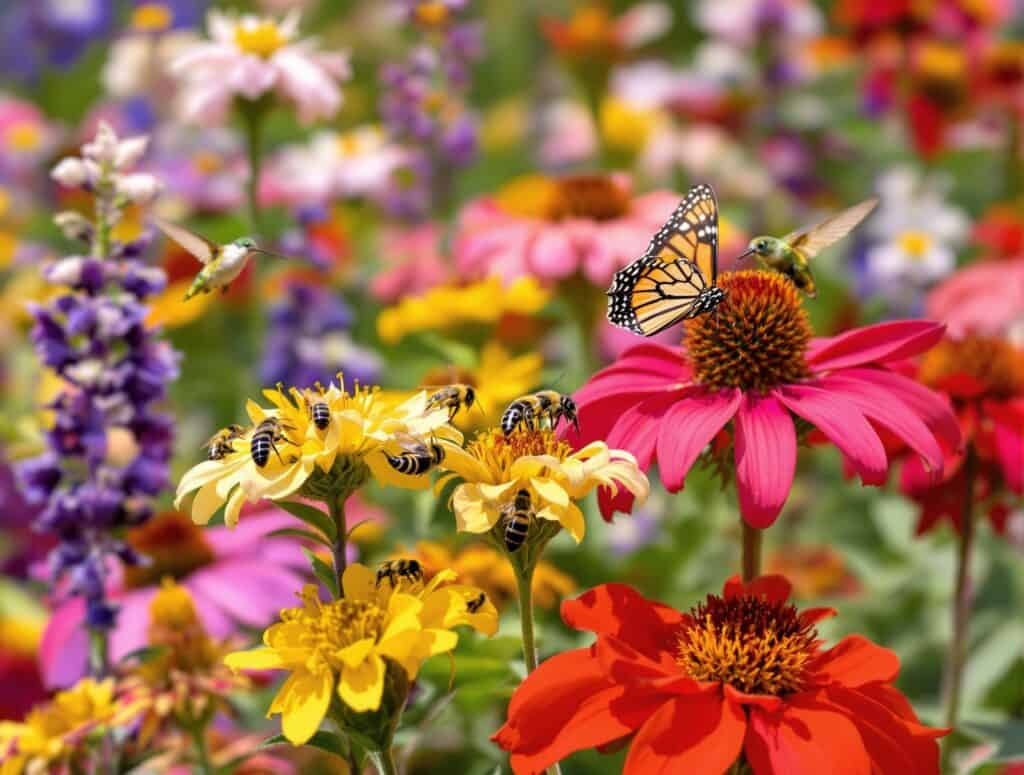
Native plants and native pollinators evolved together. Montana’s bees know exactly how to work Lupine flowers. Hummingbirds have deals with native Penstemons going back millennia. When you plant natives, you’re supporting relationships older than civilization.
We design pollinator gardens with succession blooming—something always in flower from spring through fall. No gaps in the buffet. Your garden becomes a crucial refueling station.
The New American Garden Style
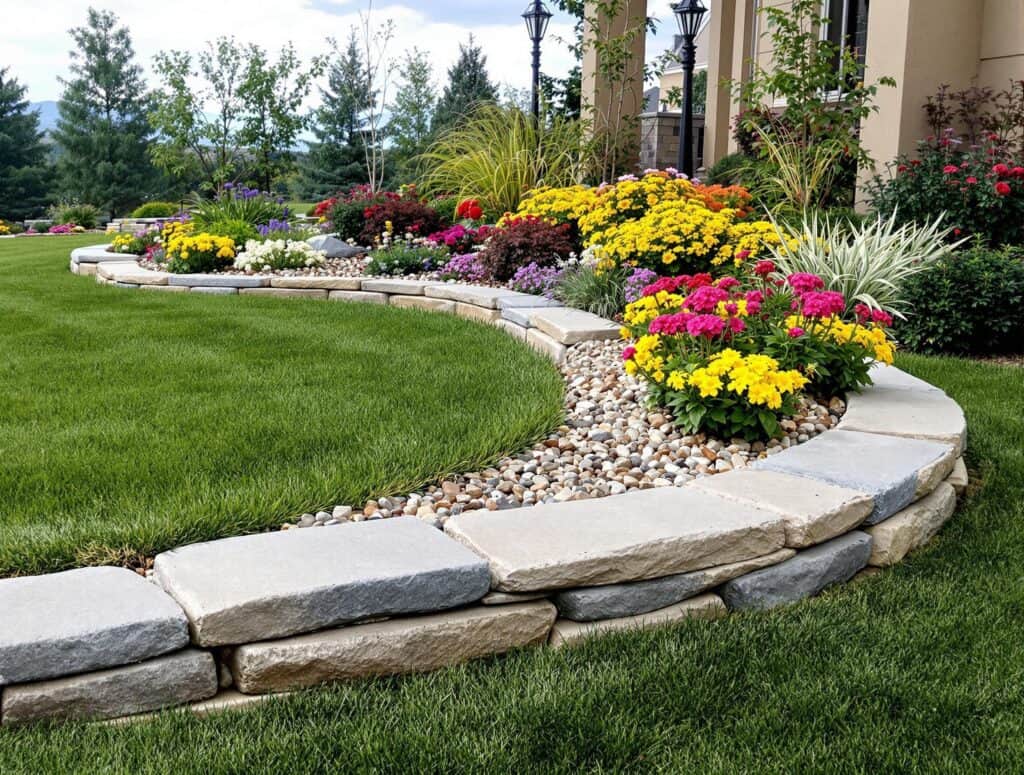
Inspired by natural plant communities but designed for human enjoyment. We use natives in bold sweeps, creating rivers of grasses punctuated by perennial islands. Modern, artistic, yet deeply rooted in place.
The Rocky Mountain Cottage Garden
Traditional garden style meets Montana natives. Structured beds overflow with native abundance. Formal paths wind through informal plantings. The charm of an English garden with plants that actually survive.
The Contemporary Native Landscape
Clean lines filled with native textures. Architectural grasses in modern containers. Native sedums in geometric patterns. Proving that native and contemporary aren’t opposites—they’re perfect partners.
We meet at your place. We listen more than we talk. We ask questions that might surprise you. ("What's your favorite vacation memory?" tells us more than "What's your budget?")
We go away and dream on your behalf. Then we come back with ideas—some safe, some that might make you say, "Wait, we could do THAT?"
Together, we land somewhere between practical and magical. We refine until you're doing that excited hand-gesture thing when you describe it to friends.
We nail down every detail. Which exact plants. Which specific stones. Where every light goes. No surprises (except good ones).
We handle everything. Permits, scheduling, coordination. You just watch your yard transform and try not to hug us too often.

Your outdoor space is waiting to become something more. Something that fits your life perfectly. Something that makes you cancel dinner plans because the backyard is calling.
Let’s create something Montana would be proud of.