How Our Spatial Psychology Landscape Design Process Helps You Feel Rejuvenated
At Smooth Stone Landscaping, we believe outdoor spaces should nurture the mind, body, and spirit. Our expertise lies in spatial psychology landscape design that draws from environmental psychology to create environments where people feel restored, safe, and connected. This approach explores how physical layouts influence emotions, behaviors, and overall well-being, setting us apart as leaders in thoughtful landscape design and construction for homeowners, architects, and contractors in Bozeman and surrounding areas.
1. Proxemics Principles and Our Special Attention to Biophilia
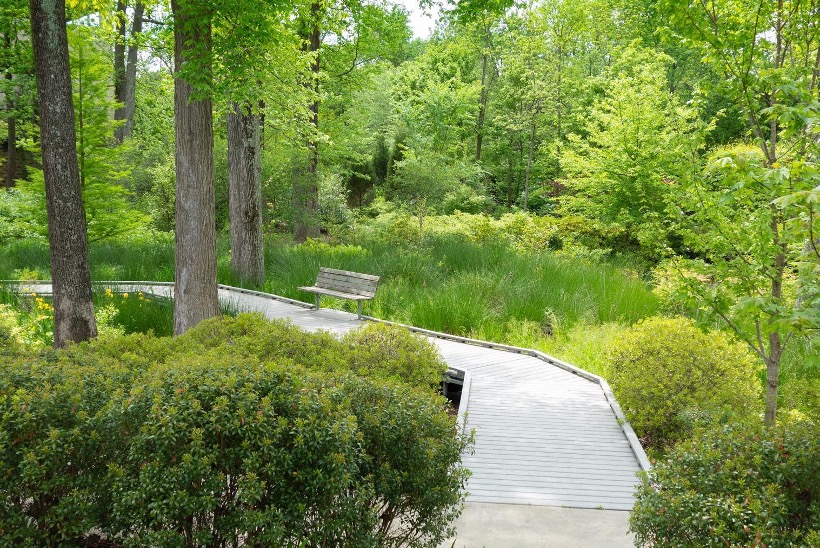
Human-space interaction forms the foundation. Our expertise in Landscape Architecture and extensive experience in the wilderness and outdoor settings give us a portfolio of knowledge and experience that comes out in our work. For example, spatial psychology research reveals how curved pathways encourage gentle exploration and a relaxed pace, while straight paths support efficient movement. We recommend primary paths 5-6 feet wide for comfortable conversation and secondary paths 3-4 feet wide for intimate strolls. Proxemics principles are rules of thumb that guide personal space zones—crowded areas feel stressful unless balanced with solitude pockets. Biophilia is a term to describe our special attention to integrate natural elements like trees, water, and greenery to lower stress levels and boost mood.
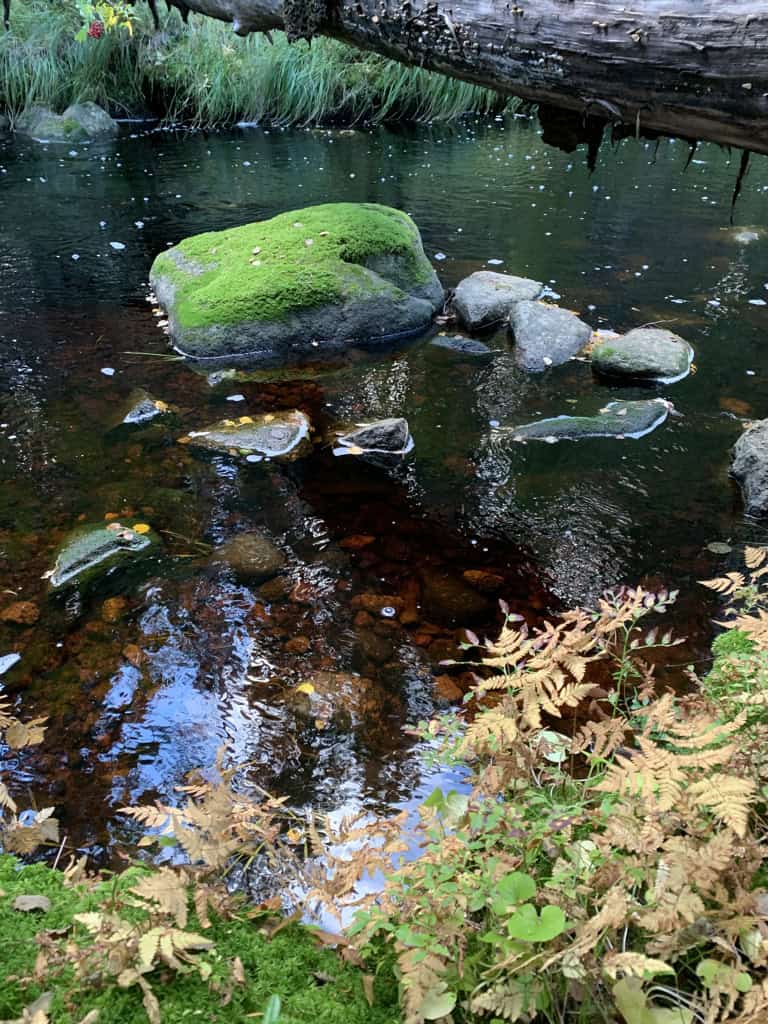
Emotional impacts are powerful. Restorative environments with water features (calibrated to 40-50 dB for calming sounds such as gentle rain) and soft textures promote relaxation, per Attention Restoration Theory by Rachel and Stephen Kaplan. These designs that utilize spatial psychology offer “being away” from urban noise, “extent” through immersion in scenes that make sense (occurring in nature), soft fascination via leaf sway or flowing water, and compatibility with daily needs. Roger Ulrich’s research shows that natural views reduce stress. Sense of place evokes cultural meaning, fostering belonging in community gardens or memorial spaces.
The careful placement of hardscape, plantings, and outdoor furniture can actually impact your mood significantly if designed well: benches invite sitting, open lawns encourage play, and seating clusters 4-6 feet apart promote conversation or angled setups for privacy. Safety comes from clear sightlines of 10-20 feet, accessible and well-lit paths, and shaded areas that feel welcoming. Jan Gehl’s human-scale urban spatial psychology design prioritizes pedestrian comfort, varied micro-environments (sunny vs. shaded), and intuitive layouts.
2. Context is Crucial
Cultural and contextual factors matter. Designs adapt to urban vs. rural needs or diverse cultural preferences for communal vs. individual spaces. Applications span residential gardens for family tranquility, therapeutic landscapes in care facilities with sensory plants, urban designs with green corridors, and public parks balancing social hubs with quiet groves.
At Smooth Stone Landscaping, we apply spatial psychology in every project with data-driven precision while keeping client experience central. A typical residential patio begins at 100-130 square feet for 2-4 people. Pathways use 5-8-foot widths for high-traffic flow and 3-4-foot secondary routes. Vegetation targets 50% of required trees should be canopy trees, with 1 tree per 1,600 square feet of landscaped area, or as otherwise specified for the project type.
It’s common to use 16-33 foot spacing and low-density planting (1-2 plants per square meter) for openness and safety. Lighting uses 5-20 lux warm 2700-3000K tones along paths and 50-100 lux for features. Water features maintain 40-50 dB at 10 feet, with pumps calibrated for gentle flow. Seating heights are 16-18 inches with 2-3 feet per person width.
Our process starts with site analysis, soil tests providing amendment recommendations (per City of Bozeman standards, focusing on practical implementation rather than rigid texture or pH mandates), client lifestyle interviews, and renderings. In addition to our attention to spatial psychology, we incorporate superior construction quality: We may use 8,000 psi pavers with ±0.12-inch leveling tolerance over 10 feet, 8-inch compacted bases at 95% Proctor density, and 1.5-10% drainage slopes.
French drains handle local rainfall events. Planting depths reach 12-18 inches for shrubs in amended soil with 2-4 foot spacing and 95% survival guarantees due to our emphasis on native drought-tolerant plant material. Mulch depth meets the clarified 3-inch minimum in all landscaped areas not covered by plants. This ensures durability aligns with psychological benefits and Bozeman’s updated Landscape and Irrigation Performance and Design Standards.
3. Landscape and Irrigation Performance and Design Standards
We align with Bozeman’s emphasis on drought-adapted trees (minimum 75% of proposed trees with plant factor 0.3 or less for prescriptive plans) and canopy trees (50% of required trees). Irrigation systems include master valves for all projects and flow sensors for mainlines 2 inches or greater, WaterSense-labeled controllers, rain/freeze/soil moisture sensors, and multi-stream multi-trajectory (MSMT) nozzles for overhead systems. Trees may share drip zones with shrubs or perennials when using drip irrigation, considering root zones for efficiency. Temporary irrigation follows city guidelines for establishment, with permanent systems disabled in rights-of-way as needed.
Local Bozeman projects highlight our strengths in spatial psychology design. One residential backyard featured winding paths with 10-16 foot radii, seat benches with 4-6 feet margin with shared outdoor furniture seating, native drought-adapted plantings at low density (aligning with 75% drought-adapted requirement), and a fountain calibrated to 45 dB. Homeowners reported reduced stress and increased family time. Architects appreciate our novel international concepts integrated with psychology and local compliance, while contractors value transparent timelines, pre-installation meetings, rock removal (>2 inches), and quality materials from Belgard or Unilock.
4. Deep Dives into Key Spatial Psychology Researchers
Roger Ulrich’s studies in spatial psychology demonstrate that views of nature speed recovery and reduce pain medication needs in healthcare. We apply this by positioning benches and outdoor furniture to face green views in therapeutic designs. Rachel and Stephen Kaplan’s Attention Restoration Theory guides “soft fascination” elements like subtle water movement. Jan Gehl advocates human-scale details, which we achieve through varied seating clusters and intuitive paths, patios with natural stone or perfectly matched pavers, all compliant with accessibility and Bozeman boulevard/median requirements (e.g., no large obstructing rocks).
RELATED | The Psychology of Landscape Design: How Your Environment Affects Your Well-Being
Bozeman Case Studies
Case 1: 400 sq ft stone patio – 50%+ vegetative coverage via seed mix/turf, 3″ mulch, drought-adapted trees, curved 5-6 ft paths, 40-50 dB water feature. Result: 25% perceived stress reduction. Case 2: 1,200 sq ft residential garden with lighted retaining wall – 30% canopy, medium-density planting, 12-18″ amended soil per recommendations, drip zones shared with perennials, 6-12″ risers for native grass. Homeowner ROI: increased property value 10-12%.
5. Comparisons to Standard Designs
Standard designs often ignore psychology, leading to 20-30% lower restoration outcomes in our estimation. Our spatial psychology landscape design with Bozeman-aligned drought focus, efficient irrigation, and 3″ mulch yields superior biophilia benefits, water savings, and compliance. From accent lighting to custom fountain installation, we can walk you through the process of maximizing the enjoyment of your outdoor environment through an architectural approach to spatial psychology.
RELATED | Discover our superior construction quality services
6. How Attention to Spatial Psychology Benefits You
- Homeowners: Mental health gains, family connection.
- Architects: Innovative, code-compliant designs.
- Contractors: Durable installs, transparent processes. Potential clients: ROI via value, low maintenance.
Ready to experience the profound benefits of spatial psychology landscape design?
Contact Smooth Stone Landscaping today for a personalized consultation. Our Bozeman-based experts will design and construct a landscape that enhances your well-being, using data-backed principles compliant with local standards and premium materials. Visit smoothstonelandscaping.com or call us now—let’s create your restorative outdoor sanctuary and convert your vision into reality.